
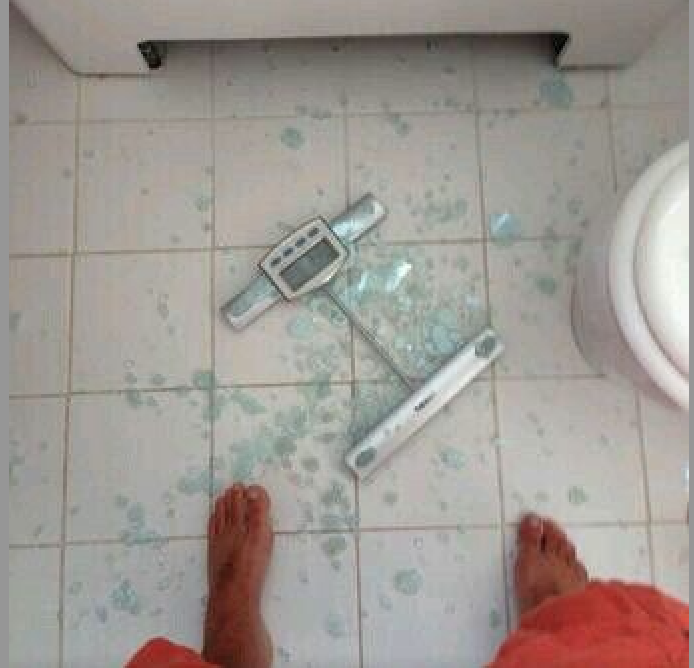
Why the scale was never the truth and how to take your power back
The Weight of the Scale
Most of us are aware of the voices in our heads. The monsters under our beds. The toxic exes, the manipulative friendships, the patterns we know aren’t good for us.
But there’s one relationship we rarely name.
It lives quietly in the bathroom.
Pretends to be neutral.
Acts like it’s just giving “information.”
And it might be the most manipulative one of all.
The scale.
How We Got Here (A Brief Reality Check)
The modern bathroom scale didn’t become common until the early 20th century. Before that, most people had no idea what they weighed. Weight was measured occasionally in public places — pharmacies, train stations, penny scales — not daily, not privately, and certainly not emotionally.
It wasn’t until life insurance companies, the medical system, and diet culture stepped in that weight became moralized. Suddenly, a single number was framed as a marker of health, discipline, and personal worth.
Imagine living your life without knowing that number.
No daily judgment.
No morning mood swings.
No attaching your value to a few digits.
Radical, right?
The Psychological Weight
That one number — just a few digits — has been given far too much power.
We tie it to:
- our worth
- our confidence
- our attractiveness
- our self-control
- our “success” at taking care of ourselves
For many of us, it’s so loaded that we close our eyes when we step on it. We brace. We flinch. We let it decide what kind of day we’re allowed to have.
That’s not neutral data.
That’s conditioning.
And we’re not doing that anymore.
Because here’s the truth: the number on the scale is not accurate, relevant, or fair as a measure of health.
Let’s talk about why.
The Scale Truths
1. Your body is made of more than fat.
The scale measures total body mass — organs, bones, muscles, blood, food, water, connective tissue — all the systems keeping you alive and functioning.
What it does not tell you:
- body fat percentage
- muscle mass
- bone density
- metabolic health
- hormonal balance
- inflammation levels
Two people can weigh the same and have completely different bodies, health markers, and lifestyles. The scale collapses complexity into a single, misleading number.
2. The number changes for reasons outside your control.
The scale is incredibly sensitive to short-term fluctuations.
The number can shift based on:
- hydration status
- sodium intake
- carbohydrate intake (stored with water)
- menstrual cycle and hormonal shifts
- digestion and bowel movements
- inflammation and muscle repair from workouts
- sleep quality and stress hormones
- travel, altitude, and time of day
A 2–5 pound change in either direction often reflects water and glycogen, not fat gain or loss.
3. You are more than your weight.
A number cannot measure the things that actually make a life feel good or a body function well.
It cannot measure:
- strength or stamina
- mental clarity
- emotional regulation
- resilience or healing
- confidence or self-trust
- how you nourish yourself when no one is watching
Reducing your identity to a number strips you of your humanity. Your worth is not data.
4. The scale doesn’t show progress — your body does.
Many of the most meaningful health improvements happen without weight change.
Progress can look like:
- improved sleep quality
- steadier energy throughout the day
- fewer cravings or binge urges
- better digestion and regularity
- increased strength or endurance
- improved lab values
- more stable mood and cycle health
The scale cannot capture internal adaptations, behavioral consistency, or metabolic healing.
5. Peace with food and your body is more powerful than any number.
Chronic fixation on weight keeps the nervous system in a state of threat.
When you stop letting the scale lead:
- stress hormones decrease
- food choices become less reactive
- consistency becomes easier
- trust with your body rebuilds
- health behaviors become sustainable
True health is not driven by fear or surveillance. It grows in safety, nourishment, and respect.
Breaking Up With the Scale (Without Ghosting It Overnight)
If the scale is your toxic ex, we’re not pretending you don’t still care. We’re just setting boundaries while you reclaim your power.
Here’s how to start distancing yourself:
1. Create scale days.
Choose specific days (for example, Tuesday and Thursday) and do not weigh yourself outside of them. Containment matters.
2. Make the scale inconvenient.
Put it somewhere awkward — a kitchen cabinet, a high shelf, the patio. Not in the bathroom where you step on it automatically.
3. Build a replacement ritual.
Write down five things you can do instead of stepping on the scale. When the urge hits, reach for your list.
Examples:
- Drink a glass of water
- Dance to your favorite song
- Go for a short walk
- Journal one body-neutral observation
- Take three deep breaths
Train your nervous system that the urge passes — and you are safe without the number.
You don’t need permission from a scale to take care of your body.
You were never meant to live under constant evaluation.
You are allowed to choose peace.
-Olivia Jade
 Jaded By Olivia Jade
Leave a comment